
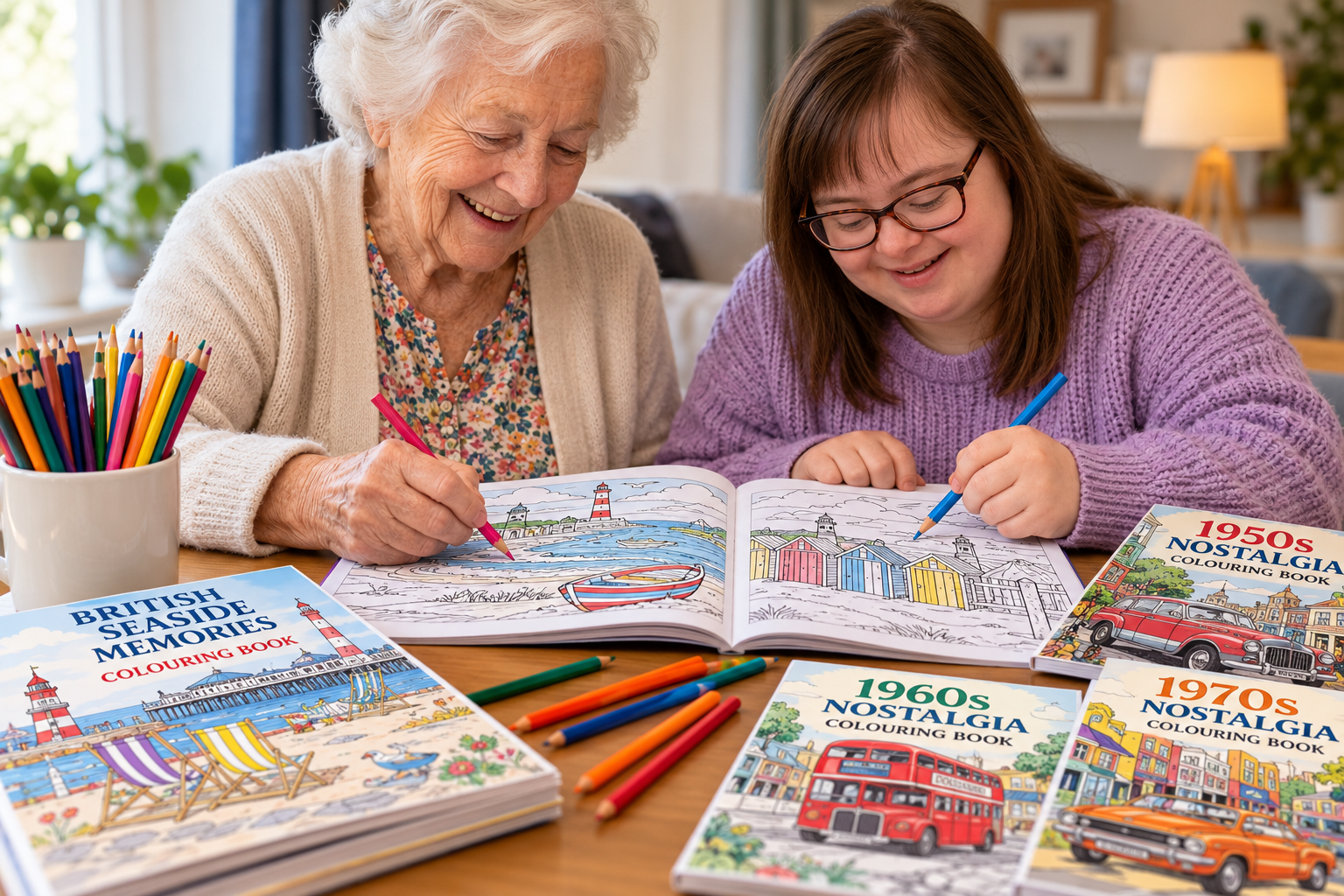
Sometimes, the simplest activities can make the biggest difference.
You don’t need expensive equipment, complicated instructions, specialist technology or a room full of resources. Sometimes all you need is a colouring book, a handful of pencils and a little bit of time.
Colouring is an affordable, accessible and enjoyable activity that can offer real value to neurodiverse people, including those with autism and ADHD, as well as older adults and people living with dementia or memory difficulties.
But why?
Because colouring offers something that many activities don’t. It gives people the freedom to participate at their own pace, without the pressure to get things right, compete, remember complicated instructions or produce something perfect.
It can provide a focus for restless minds, encourage creative expression, offer opportunities for reminiscence and create a lovely reason to spend time together.
And perhaps best of all, there is no right or wrong way to do it.
Whether you’re a parent, carer, family member, support worker, teacher or simply looking for an inexpensive activity that someone might enjoy, colouring deserves a place in your toolkit.
Let’s look at why.
Why Is Colouring Good for Neurodiverse People and Those with Memory Challenges?
Colouring is a simple creative activity that can encourage concentration, self-expression, relaxation and social interaction.
For some neurodiverse people, it provides a structured activity with plenty of room for individual choice. For people living with dementia, familiar images and straightforward creative tasks can offer opportunities for enjoyment, connection and reminiscence.
It isn’t a treatment or a cure, and it won’t suit everyone. However, when matched to someone’s interests and abilities, colouring can be a genuinely useful everyday activity.
Here are seven reasons why.
1. Colouring Provides Focus Without Too Much Pressure
For someone with ADHD, autism or other neurodevelopmental differences, finding an activity that holds their attention without becoming overwhelming can sometimes be difficult.
Colouring offers a straightforward starting point.
There is a clear activity, a defined space to work within and an almost endless choice of colours. There is no complicated sequence of instructions and no expectation to finish a particular page.
For some people, this combination can make colouring an appealing way to occupy their attention.
It can also provide an opportunity to concentrate on one enjoyable task rather than juggling multiple demands.
Why it can help:
- Offers a clear, manageable activity.
- Allows people to work at their own pace.
- Provides opportunities to practise sustained attention.
- Encourages individual choice and independence.
- Doesn’t require lengthy explanations or complicated rules.
The important thing is not to insist that someone finishes a picture. Five minutes of enjoyable colouring is just as worthwhile as an hour.
2. A Creative Outlet Without the Pressure to Be Artistic
Not everyone enjoys drawing, painting or making things from scratch.
Sometimes the blank page is the biggest obstacle.
Colouring removes much of that initial pressure. The outlines are already there, leaving the individual free to choose the colours, experiment with combinations and make the picture their own.
There is no requirement to colour realistically, stay within every line or follow a particular colour scheme.
A blue elephant? Absolutely.
A purple seaside hut? Why not?
For people who find communication difficult, creative activities can also provide another way to express preferences and personality.
Choosing colours, selecting pictures and deciding what to work on can all provide opportunities to communicate without relying entirely on words.
And that’s worth encouraging.
3. A Simple Activity That Can Support Relaxation
Life can be busy, noisy and demanding.
For some neurodiverse people, particularly those who experience sensory overload or difficulty regulating attention, having access to a familiar, low-pressure activity can be useful.
Colouring can provide a quieter alternative to screens, busy environments and activities involving lots of instructions.
The repetitive movements involved in colouring may also feel enjoyable and calming for some individuals.
It is important to recognise that sensory preferences vary considerably. Some people love the feel of coloured pencils on paper, while others may dislike particular textures, sounds or materials.
The trick is finding what works for the individual.
A few simple ideas:
- Offer a comfortable, quiet place to sit.
- Provide a choice of colouring materials.
- Avoid overwhelming someone with too many options.
- Allow breaks whenever needed.
- Let the person choose whether they want company or some quiet time.
Colouring doesn’t need to become another scheduled task. Sometimes its greatest value is simply providing something enjoyable to do.
4. Colouring Can Encourage Reminiscence for People Living with Dementia
This is where colouring books with familiar subjects and nostalgic themes can be particularly interesting.
Dementia can affect memory, communication, concentration and the ability to carry out familiar everyday tasks.
However, this doesn’t mean someone stops enjoying creative activities or connecting with familiar experiences.
The Alzheimer’s Society recommends creative activities as one way to help people with dementia remain active and involved. Its activities handbook also specifically suggests adult colouring books, particularly those featuring subjects that interest the individual.
And there’s a good reason to consider nostalgic colouring books.
A picture of a traditional British sweet shop, a vintage car, an old-fashioned kitchen or a seaside holiday might provide a starting point for a conversation.
Someone might recognise the type of shop they visited as a child, remember a favourite family holiday or simply enjoy looking at something familiar.
You don’t need to quiz them about their memories.
Instead, let the conversation happen naturally.
Try questions such as:
- Did you ever go to a seaside resort like this?
- What colours do you remember from your childhood?
- Did you have a car like this?
- What was your favourite sweet shop?
- Did you enjoy holidays by the sea?
Sometimes a conversation will develop. Sometimes it won’t.
Both are absolutely fine.
The objective isn’t to test someone’s memory. It’s to create an enjoyable experience in the present.
5. Nostalgic Colouring Books Can Provide a Talking Point Across Generations
One of the lovely things about colouring is that it doesn’t have to be a solitary activity.
It can be something grandparents and grandchildren enjoy together, a shared activity between a carer and someone living with dementia, or a relaxed group activity in a care home or community setting.
And nostalgic illustrations provide an added dimension.
British history, familiar places, traditional shops, old-fashioned transport and childhood memories can all become conversation starters.
For example, our British Seaside Memories Colouring Book celebrates the traditional British seaside, with illustrations featuring beach huts, donkey rides, Victorian piers, amusement arcades, fish and chip shops and other familiar holiday scenes.
You can find it here:
It could be a lovely starting point for conversations about family holidays, favourite seaside towns and memories of days spent at the coast.
Likewise, our 1950s Nostalgia Colouring Book features 50 scenes inspired by everyday British life during the decade.
From traditional shops and vintage transport to family homes, schools, pubs and seaside holidays, the illustrations offer plenty of familiar subjects to explore.
Take a look here:
And if someone has fond memories of the following decades, there are more opportunities to explore.
Our 1960s Nostalgia Colouring Book celebrates the fashions, music, transport and everyday experiences of Sixties Britain.
The 1970s Nostalgia Colouring Book takes things into the Seventies, with familiar fashions, classic cars, music, seaside holidays and everyday British life.
The beauty of these books is that they offer more than pictures to colour. They can provide a shared starting point for conversation, storytelling and simply enjoying time together.
6. Colouring Is Affordable and Doesn’t Require Specialist Equipment
Let’s be honest. Specialist activities, equipment and organised sessions can become expensive.
Colouring is refreshingly straightforward.
You don’t need a tablet, an internet connection, expensive art supplies or specialist training.
A basic colouring book and a selection of pencils are enough to get started.
You can use materials you already have at home, and the activity can be enjoyed almost anywhere.
For families, carers and organisations working with limited budgets, this is a real advantage.
What do you actually need?
- An adult colouring book with suitable illustrations.
- A selection of coloured pencils.
- A comfortable chair and suitable table.
- Good lighting.
- A little time and encouragement.
That’s it.
There is no ongoing subscription, complicated setup or expensive equipment to maintain.
And unlike many digital activities, colouring provides a screen-free alternative that can be enjoyed independently or with other people.
7. It Can Create a Sense of Achievement and Independence
Completing a picture, choosing a colour combination or simply deciding which page to work on can provide a small but meaningful sense of accomplishment.
For someone who struggles with certain everyday tasks, having an activity where they can make their own decisions and see a result can be particularly enjoyable.
But it’s important not to measure success by the finished picture.
Success might be:
- Choosing a picture independently.
- Picking a favourite colour.
- Spending ten minutes enjoying an activity.
- Sharing a smile with a family member.
- Starting a conversation.
- Returning to an activity they previously enjoyed.
These are all worthwhile outcomes.
And nobody needs to produce a masterpiece.
How to Introduce Colouring to Someone with Additional Needs or Memory Difficulties
The secret is to make it easy, comfortable and enjoyable.
Don’t turn colouring into a test, a lesson or another activity someone feels obliged to complete.
Instead, start small and adapt the experience to suit the individual.
Here’s a simple five-step approach.
Step 1: Choose the Right Colouring Book
Think about the person’s interests, experiences and abilities.
For someone living with dementia, familiar subjects and nostalgic illustrations may be a good starting point.
For someone with ADHD, a subject they already enjoy may help encourage engagement.
For someone with autism or sensory sensitivities, consider the complexity of the illustrations and whether the page feels visually overwhelming.
Look for:
- Clear, recognisable illustrations.
- Subjects that interest the individual.
- Designs with suitable levels of detail.
- Pages that don’t feel too cluttered.
- Adult-appropriate themes and presentation.
Remember, different people enjoy different things. There isn’t one perfect colouring book for everyone.
Step 2: Keep the Equipment Simple
Start with a small selection of coloured pencils rather than putting 50 different colours on the table.
Too much choice can sometimes feel overwhelming.
Make sure the pencils are comfortable to hold and suitable for the individual’s abilities.
If grip or dexterity is an issue, thicker pencils or adapted grips may help.
Step 3: Create a Comfortable Environment
Find somewhere comfortable with enough space to work.
Consider lighting, background noise, seating and any sensory preferences.
Some people will enjoy colouring alongside someone else. Others may prefer to concentrate independently.
There is no need to create an elaborate activity room.
A kitchen table, a comfortable chair and a little peace and quiet may be all that’s needed.
Step 4: Let the Individual Lead
This is probably the most important step.
Offer encouragement, but avoid taking over.
Let the person choose the picture, select the colours and decide how much they want to do.
If they want to colour a tree purple, let them.
If they change their mind halfway through, that’s fine too.
For someone living with dementia, simple prompts can help get things started. However, avoid correcting mistakes or repeatedly asking questions that might cause frustration.
The experience should be enjoyable, not an assessment of what someone can remember or do.
Step 5: Enjoy the Experience Rather Than the Finished Product
Don’t focus on completing the page.
Celebrate the decisions, the creativity and the time spent enjoying the activity.
If the person wants to show someone their work, encourage them.
If they want to put it away and start another day, that’s equally fine.
The value is in the experience itself.
Choosing the Right Colouring Book: What Should You Look For?
Not all colouring books are created equal.
Some contain highly intricate illustrations with hundreds of tiny sections. Others feature larger, simpler designs that are easier to approach.
The right choice depends on the person using it.
Here are a few things worth considering.
For neurodiverse adults and older children:
- Choose subjects that reflect their interests.
- Look for a mixture of designs and complexity.
- Consider whether detailed illustrations are enjoyable or overwhelming.
- Allow freedom to experiment with colours.
- Avoid making the activity feel like homework.
For people living with dementia:
- Consider familiar and recognisable subjects.
- Look for clear illustrations with distinguishable shapes.
- Choose themes connected to personal interests.
- Consider nostalgic images that may encourage conversation.
- Avoid pages that are excessively complicated if they cause frustration.
For care homes and community groups:
- Choose adult-appropriate colouring books.
- Consider different abilities and levels of dexterity.
- Have a selection of pencils available.
- Offer individual and group activities.
- Allow people to participate without pressure.
One final point: don’t assume that someone with dementia needs a children’s colouring book.
Adults deserve activities that respect their interests, experiences and individuality.
Age-appropriate illustrations and subjects can make a real difference to how an activity is received.
Is Colouring a Form of Therapy?
It’s important to distinguish between enjoying a creative activity and receiving professional art therapy.
Colouring can be a useful leisure activity that encourages creativity, engagement and opportunities for relaxation.
However, it isn’t automatically art therapy, and there is no guarantee that it will reduce anxiety, improve memory or change the progression of dementia.
Formal art therapy is a professional therapeutic approach delivered by appropriately trained practitioners.
That doesn’t make ordinary colouring any less worthwhile.
You don’t need to make medical claims to recognise the value of an affordable activity that someone genuinely enjoys.
The best approach is to see colouring as one option within a wider range of meaningful activities.
Why British Nostalgia Makes Such a Good Colouring Theme
There is something special about familiar British scenes.
Traditional sweet shops, seaside holidays, old-fashioned buses, village greens, vintage cars and family kitchens are all part of our shared cultural history.
For someone who grew up in the 1950s, 1960s or 1970s, these images may bring back memories of a particular time and place.
For younger generations, they offer an opportunity to discover what everyday life looked like before smartphones, streaming services and online shopping.
And for families, they can provide a lovely opportunity to share stories across generations.
At British Colouring Books, we create colouring books inspired by British life, history, nostalgia, wildlife and humour.
Our aim is simple. To produce interesting, enjoyable colouring books that give people something different to pick up, put the screens aside and enjoy some creative time.
Whether it’s revisiting childhood memories, exploring British wildlife or simply having a laugh, there’s a subject for all sorts of interests.
Frequently Asked Questions About Colouring and Neurodiversity
Is colouring good for people with ADHD?
Colouring can be an enjoyable activity for some people with ADHD. It offers a straightforward creative task, opportunities for choice and something to focus on without complicated instructions. However, individual preferences vary, and not everyone with ADHD will find colouring engaging.
Is colouring good for adults with autism?
Some autistic adults enjoy colouring because it offers a structured creative activity with opportunities for individual expression. Others may find particular colours, textures or visual patterns uncomfortable. The best approach is to consider the person’s sensory preferences and allow them to choose what works.
Can colouring help people with dementia?
Colouring can provide an enjoyable creative activity for people living with dementia. Familiar illustrations may also offer opportunities for reminiscence and conversation. The activity should be adapted to the individual’s interests and abilities, without placing pressure on them to complete a picture or remember particular details.
Does colouring improve memory?
There isn’t sufficient evidence to claim that ordinary colouring improves memory or slows dementia. However, familiar images can sometimes prompt conversations about past experiences. Colouring can also provide an opportunity for enjoyable engagement in the present.
What is the best colouring book for someone with dementia?
Look for adult-appropriate illustrations featuring familiar subjects and themes that reflect the person’s interests. Nostalgic scenes, traditional British shops, vintage transport, gardens and seaside holidays may be good starting points, particularly for someone who enjoys looking back at earlier decades.
Are colouring books suitable for care homes?
Yes. Colouring can be a relatively inexpensive activity for care homes, day centres and community groups. It can be enjoyed individually or as part of a shared session. Choose appropriate illustrations, provide suitable pencils and adapt the activity to accommodate different abilities.
Do you need expensive colouring pencils?
Absolutely not. A basic selection of coloured pencils is perfectly adequate. Comfort and ease of use are more important than buying expensive art materials.
Can colouring be enjoyed by adults, or is it just for children?
Colouring is for everyone. Adult colouring books cover everything from nature and wildlife to architecture, humour, history and nostalgia. There is no age limit on enjoying a creative pastime.
A Simple Activity. A Surprisingly Useful Resource.
We often spend a lot of money looking for activities, equipment and entertainment that will keep people engaged.
Sometimes, the answer is considerably simpler.
A colouring book won’t solve every challenge associated with neurodiversity, dementia or memory difficulties. It isn’t a substitute for professional support, and it won’t suit everybody.
But it can offer something genuinely worthwhile.
An opportunity to concentrate, express creativity, enjoy familiar subjects, share memories or simply spend a little time doing something enjoyable.
For families, carers, schools, care homes and community organisations, it’s also an affordable resource that requires very little preparation.
And perhaps that’s the biggest attraction.
No complicated instructions. No expensive equipment. No pressure to get things right.
Just a book, some pencils and the freedom to enjoy colouring in.
Explore Our Colouring Books
At British Colouring Books, we believe colouring should be enjoyable, accessible and interesting, whatever your age or interests.
If you’re looking for nostalgic colouring books, familiar British scenes or something a little different, take a look at our collection.
Explore our 1950s, 1960s and 1970s Nostalgia books, revisit the traditional British seaside or discover the wildlife found in Britain’s waters.
Choose a subject, pick up your pencils and enjoy some creative time.
Browse the collection at BritishColouringBooks.co.uk
Because sometimes, a little colouring can go a long way.